Selling an online course often starts with a simple idea. Then the software list begins to grow: a landing page builder, an email service, a checkout tool, a video host, and a place where students can access their lessons.
Using separate tools can give you more control, but it also creates more subscriptions, integrations, and potential points of failure. For a solo creator, an all-in-one platform can be the faster way to launch and manage a small education business.
This guide compares six popular options:
The goal is not to name one universal winner. It is to help you choose the platform that fits your budget, marketing needs, and course structure.
Quick Answer
For a solo creator who wants to launch without combining several paid tools, systeme.io is the most practical place to start. It brings funnels, email marketing, checkout, automation, and course delivery into one platform, with a lower barrier to entry than many premium alternatives.
Choose another platform when you have a more specific priority:
- Thinkific: best when the learning experience and course structure come first
- Teachable: best for straightforward course and digital-product selling
- Kajabi: best for an established expert who wants a polished, broad business platform
- Podia: best for creators who value simplicity, email, community, and digital products
- ClickFunnels: best when advanced funnels and sales automation drive the business
How We Compared the Platforms
The platforms were compared using five questions that matter to a solo course creator.
1. Can it build a complete sales path?
A useful all-in-one platform should help a visitor move from a landing page to an email list, checkout, and course access without several third-party integrations.
2. Is the email marketing built in?
Sending a receipt or enrollment notification is different from running newsletters, lead-nurture sequences, and automated sales campaigns. The comparison considers both transactional and marketing email capabilities.
3. Is the course experience strong enough?
At minimum, a platform should organize lessons and modules, host common content formats, manage student access, and support a clear learning journey. Quizzes, drip schedules, progress tracking, and communities can matter as the course grows.
4. Can a beginner operate it alone?
More features are not always better. Setup time, interface complexity, and the number of tools that must be connected affect the real cost of launching.
5. Will it still work as the business grows?
A platform should leave room for more products, better automation, affiliates, subscriptions, communities, or team members without forcing an immediate migration.
For the overall starting-point recommendation, we prioritized three factors in order: a complete launch path without extra core tools, a low-commitment way to validate an offer, and manageable setup for one person. Course depth and room to grow were then used to identify better choices for more specialized needs. This is an editorial best-fit judgment for the audience described above, not a numerical score or a hands-on performance test.
Platform Comparison
| Platform | Entry option | Marketing path | Course delivery | Best for | Main tradeoff |
|---|---|---|---|---|---|
| systeme.io | Free plan; no card required | Funnels, email campaigns, and automation | Courses, drip content, and progress tracking | Budget-conscious solo creators | Less specialized course presentation |
| Thinkific | Free trial | Landing pages and built-in email automation | Course-first tools and learner management | Course-first businesses | Advanced marketing may need integrations |
| Teachable | 7-day free trial | Sales pages, upsells, and cart recovery | Courses, coaching, and memberships | Simple course selling | Campaign email needs another service |
| Kajabi | Free trial; duration can vary | Funnels, email sequences, and automation | Courses, coaching, and communities | Established experts and brands | Higher subscription commitment |
| Podia | 30-day free trial; no card required | Website, campaigns, and email automation | Courses, products, and community | Simplicity and creator businesses | Less flexible funnel architecture |
| ClickFunnels | 14-day free trial | Advanced funnels, email, and workflows | Courses, memberships, and communities | Funnel-led sales operations | More complex for a first launch |
systeme.io
Visit site- Best for
- Budget-conscious solo creators
- Entry option
- Free plan; no card required
- Marketing path
- Funnels, email campaigns, and automation
- Course delivery
- Courses, drip content, and progress tracking
- Main tradeoff
- Less specialized course presentation
Thinkific
Visit site- Best for
- Course-first businesses
- Entry option
- Free trial
- Marketing path
- Landing pages and built-in email automation
- Course delivery
- Course-first tools and learner management
- Main tradeoff
- Advanced marketing may need integrations
Teachable
Visit site- Best for
- Simple course selling
- Entry option
- 7-day free trial
- Marketing path
- Sales pages, upsells, and cart recovery
- Course delivery
- Courses, coaching, and memberships
- Main tradeoff
- Campaign email needs another service
Kajabi
Visit site- Best for
- Established experts and brands
- Entry option
- Free trial; duration can vary
- Marketing path
- Funnels, email sequences, and automation
- Course delivery
- Courses, coaching, and communities
- Main tradeoff
- Higher subscription commitment
Podia
Visit site- Best for
- Simplicity and creator businesses
- Entry option
- 30-day free trial; no card required
- Marketing path
- Website, campaigns, and email automation
- Course delivery
- Courses, products, and community
- Main tradeoff
- Less flexible funnel architecture
ClickFunnels
Visit site- Best for
- Funnel-led sales operations
- Entry option
- 14-day free trial
- Marketing path
- Advanced funnels, email, and workflows
- Course delivery
- Courses, memberships, and communities
- Main tradeoff
- More complex for a first launch
Entry options and public plan information were checked on August 11, 2026. Trial offers and plan limits can change. Payment processors, currencies, tax features, and payouts can also vary by country, so confirm the current terms for your location before subscribing.
To compare subscriptions and verified platform fees with your own sales assumptions, use our free Online Course Platform Cost Calculator.
1. systeme.io: Best Overall Value for a Solo Creator
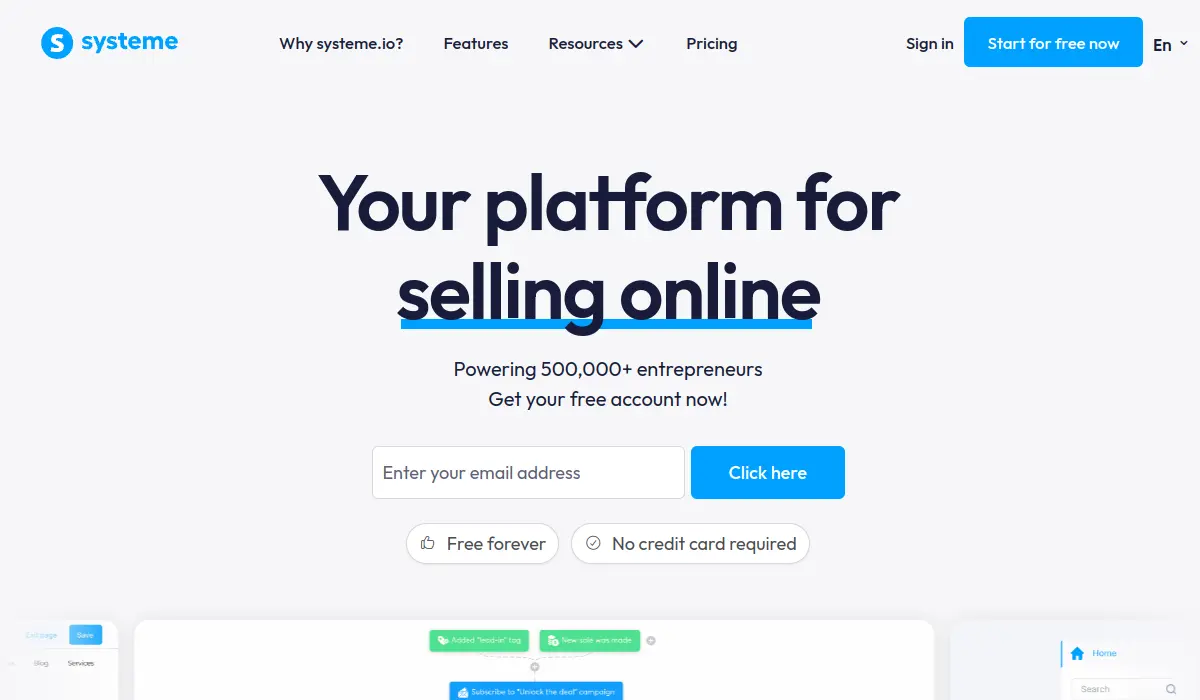
systeme.io combines sales funnels, email marketing, automation, checkout, online courses, communities, and affiliate management in one account. That combination is its main advantage.
For a new creator, the platform reduces the number of decisions required before launch. You can create an opt-in page, collect leads, send an email sequence, sell access, and enroll the buyer in a course without building a large integration stack.
What systeme.io does well
- Combines the main marketing and delivery tools
- Offers a beginner-friendly route to a first launch
- Supports email campaigns and automation
- Includes course and community tools
- Lets creators manage their own affiliate program
- Makes it possible to test a business model before building a complex stack
Where systeme.io is weaker
- Design control can feel limited compared with more premium platforms
- Course presentation is less specialized than a course-first product such as Thinkific
- Larger teams may eventually want deeper reporting or more specialized workflows
Who should choose systeme.io?
Choose systeme.io if you are launching your first course, coaching offer, membership, or digital product and want to keep software costs and integrations under control.
For a plan-by-plan breakdown, see our systeme.io pricing guide.
We also built a synthetic course and launch path in a dedicated Free account for our hands-on systeme.io review.
2. Thinkific: Best for Course Structure and Learning Experience

Thinkific is built around creating, selling, and delivering learning products. Its course organization, drip content, student management, and learning-focused features make it a strong choice for creators who care more about the classroom experience than an advanced marketing funnel.
Thinkific also provides landing pages, lead capture, sales sequences, and abandoned-cart email automation. Creators with more complex newsletters, segmentation, or lifecycle marketing requirements may still prefer one of its email-platform integrations.
What Thinkific does well
- Strong course builder and student experience
- Suitable for structured programs and larger course libraries
- Supports landing pages, sales tools, and payments
- Provides room to grow into memberships, communities, and additional learning products
Where Thinkific is weaker
- Marketing automation is not as broad as a funnel-first platform
- More advanced email strategies may require an integration
- It can be more platform than a creator needs for one simple product
Who should choose Thinkific?
Choose Thinkific if the course itself is your main product and lesson structure, student progress, and long-term learning operations matter most.
View Thinkific’s current course and pricing options
3. Teachable: Best for Straightforward Course Selling
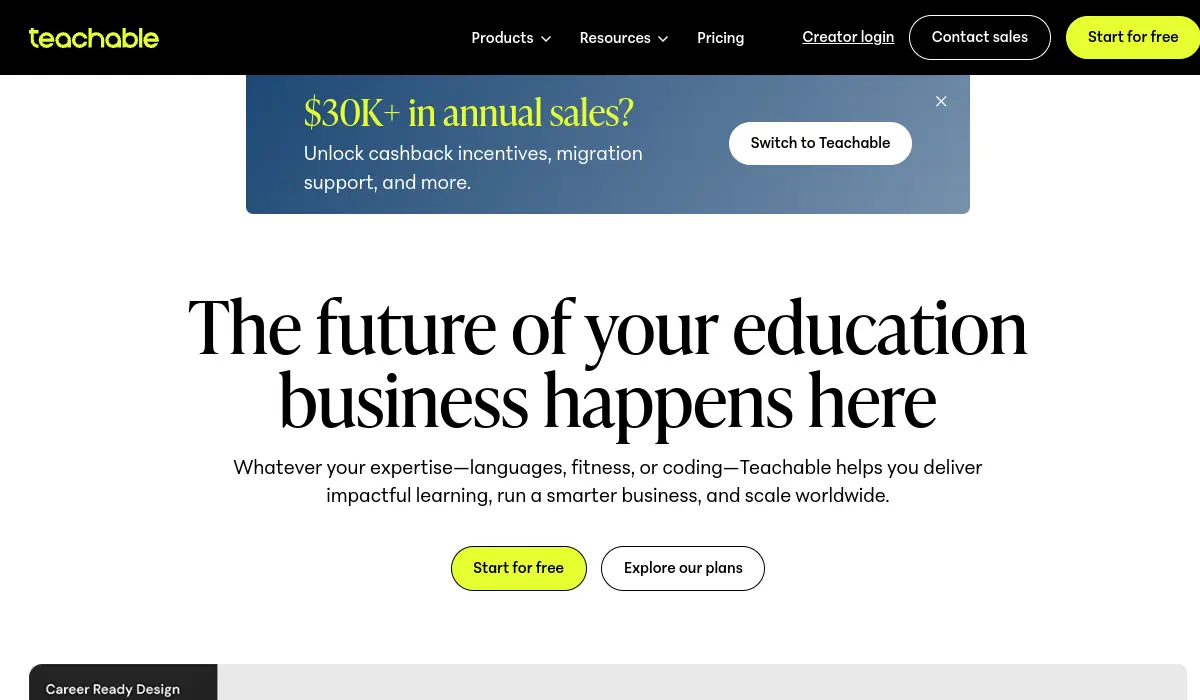
Teachable focuses on helping creators package and sell courses, coaching, memberships, and digital downloads. Its product and student-management tools make it approachable for creators who want a familiar course-platform workflow.
Teachable can send emails to users and manage automated school notifications. For advanced lead nurturing and marketing campaigns, integrations with dedicated email service providers remain useful.
What Teachable does well
- Clear course and digital-product workflow
- Built-in checkout and student management
- Supports several types of creator products
- Offers sales features such as coupons, upsells, and affiliate tools on eligible plans
Where Teachable is weaker
- Landing-page flexibility is more limited than funnel-focused platforms
- Advanced email marketing often requires another service
- Important features and transaction costs depend on the selected plan
Who should choose Teachable?
Choose Teachable if you primarily want to publish and sell educational products without building an elaborate marketing system inside the same platform.
Explore Teachable’s current plans
4. Kajabi: Best Premium All-in-One Platform
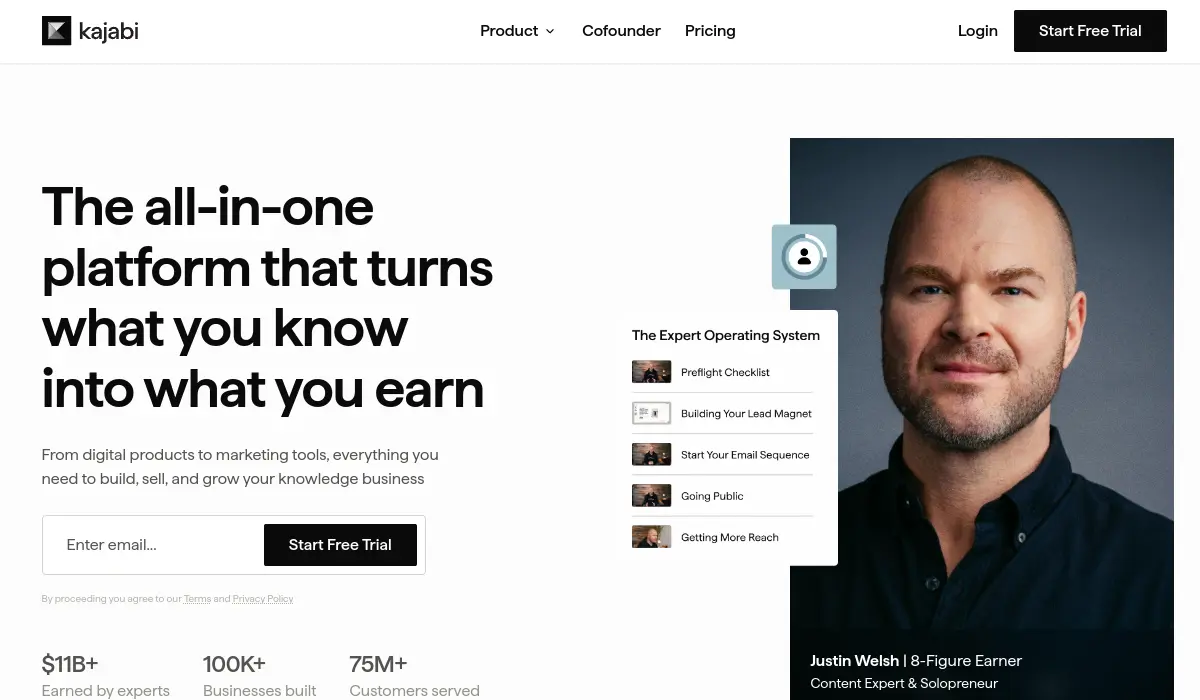
Kajabi combines websites, landing pages, email campaigns, automation, courses, communities, coaching, and affiliate management. It is one of the broadest options in this comparison.
Its main tradeoff is that a broad feature set usually means more setup and a higher financial commitment. That can be worthwhile for an established expert with validated offers, but excessive for someone who has not yet made a first sale.
What Kajabi does well
- Broad marketing and product toolset
- Strong email campaigns and automation
- Polished course, coaching, and community options
- Suitable for managing several offers under one brand
Where Kajabi is weaker
- Higher commitment than budget-oriented platforms
- More settings and features to learn
- Solo beginners may pay for capabilities they do not yet need
Who should choose Kajabi?
Choose Kajabi if you already have an audience or proven offer and want one premium platform to support marketing, delivery, and business growth.
View Kajabi’s current plans and trial availability
5. Podia: Best for Simplicity and Multiple Creator Products
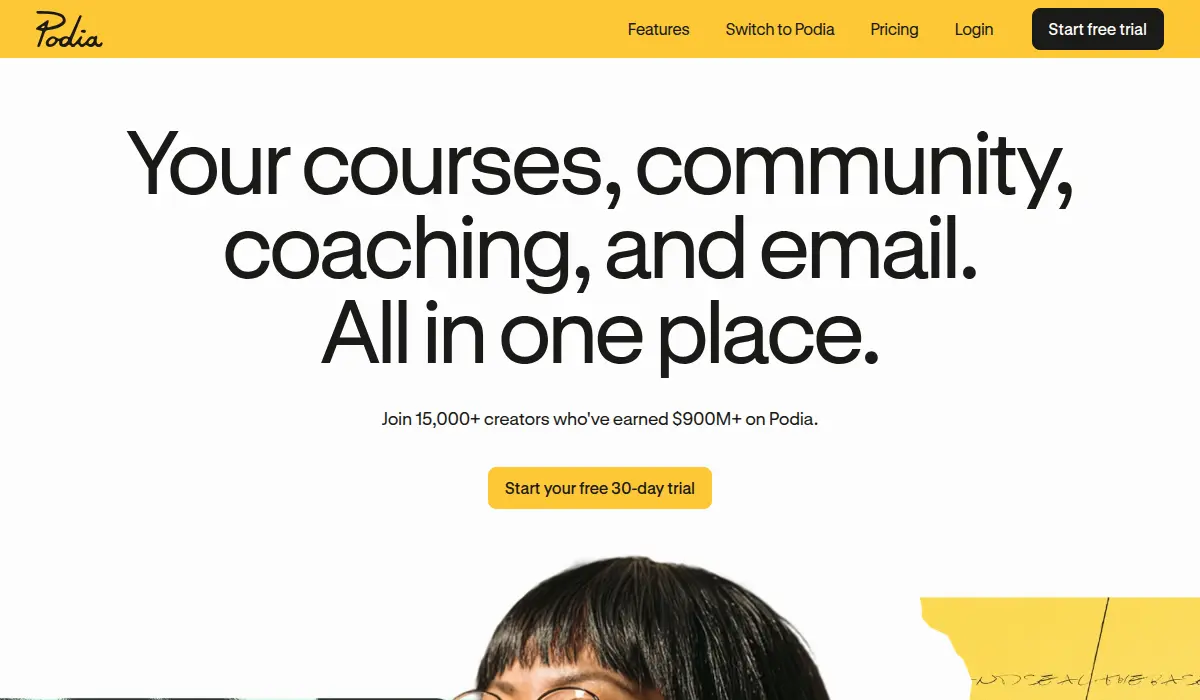
Podia brings courses, email, community, coaching, events, downloads, and a website builder together in a friendly interface. It is especially appealing to creators who sell more than one type of digital product but do not want to manage a complicated funnel system.
Its built-in email tools support broadcasts, automated campaigns, segmentation, and sales tracking. The main limitation is that creators who need highly customized funnels or advanced automation may outgrow its simpler approach.
What Podia does well
- Easy-to-understand creator workflow
- Strong combination of products, community, and email
- Supports broadcasts and automated email campaigns
- Suitable for courses, downloads, coaching, and memberships
Where Podia is weaker
- Less suitable for complex funnel architecture
- Course-viewer customization is limited
- Advanced marketing teams may want deeper automation and testing
Who should choose Podia?
Choose Podia if you want a simple home for several creator products and value ease of operation over detailed funnel control.
Check Podia’s current plans and trial
6. ClickFunnels: Best for Funnel-First Businesses
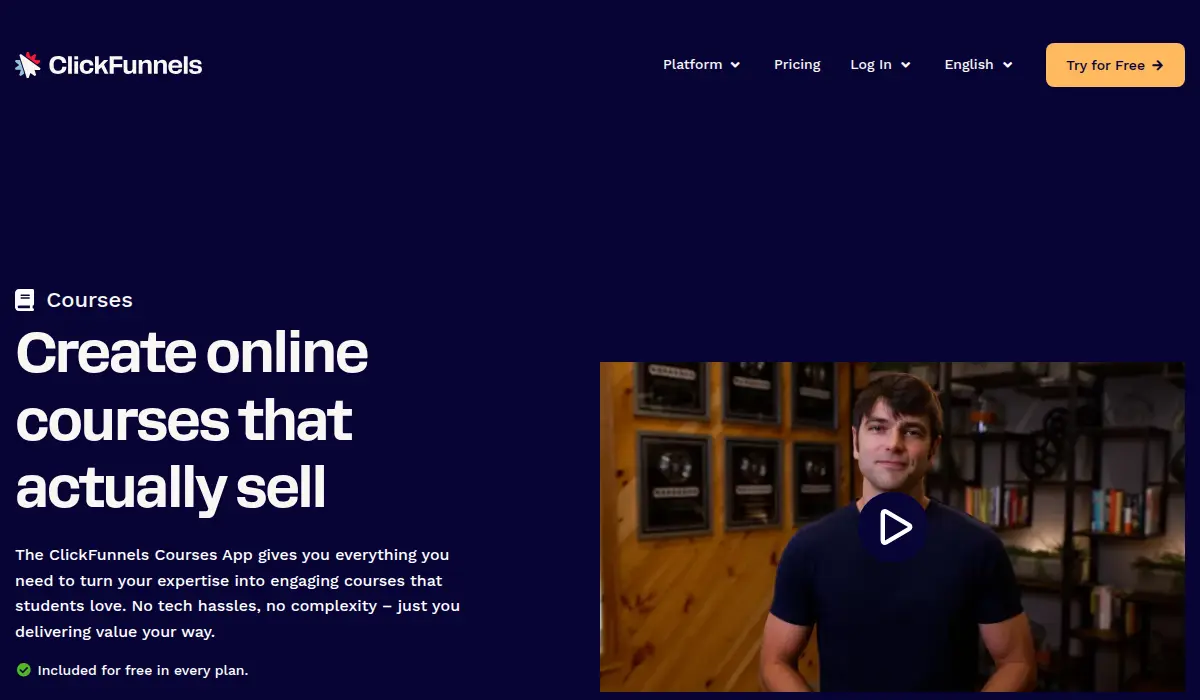
ClickFunnels is the strongest funnel-focused option in this comparison. It can manage landing pages, checkout flows, email broadcasts, automated workflows, stores, communities, and online courses.
Its course tools can organize gated content into modules and lessons and automate enrollment. Even so, the platform’s central strength remains turning leads into customers. A creator who prioritizes academic structure and student progress may find Thinkific or Teachable more natural.
What ClickFunnels does well
- Advanced sales-funnel building
- Strong checkout, upsell, and automation options
- Connects email workflows with purchases and course enrollment
- Suitable for businesses with several offers and sales paths
Where ClickFunnels is weaker
- More complex for a first-time creator
- Funnel features may be unnecessary for a simple course launch
- Course delivery is not the platform’s only or primary focus
Who should choose ClickFunnels?
Choose ClickFunnels if funnels, offer testing, upsells, and automated sales journeys are more important than having a specialized learning-management system.
Explore the current ClickFunnels platform
Which Platform Should You Choose?
Choose systeme.io if you want to launch with fewer tools
It is the strongest starting point for a budget-conscious solo creator who needs pages, email, checkout, automation, and course delivery together.
Choose Thinkific if the learning product comes first
It is a better fit for structured curricula, larger course libraries, and businesses where the student experience is the main priority.
Choose Teachable if you want a familiar course-selling workflow
It works well when the objective is to publish educational products and manage buyers without designing a complex funnel operation.
Choose Kajabi if you already have a validated business
Its broader premium toolset makes more sense when you have an audience, multiple offers, and enough revenue to justify the additional commitment.
Choose Podia if you value simplicity across several product types
It is a practical option for selling courses, downloads, coaching, and community access from one creator-friendly system.
Choose ClickFunnels if conversion funnels are the priority
It is designed for creators and marketers who want detailed control over lead capture, offers, checkout steps, upsells, and automated follow-up.
Recommended Starting Point
Most first-time solo creators do not need the platform with the longest feature list. They need a platform that lets them validate an offer without spending weeks connecting software.
For that reason, systeme.io is our recommended starting point for most beginners. Thinkific is the stronger alternative when course delivery matters more than built-in marketing, while Kajabi becomes more attractive after the business and audience are established.
Before paying annually, build one landing page, one short email sequence, one checkout flow, and one sample lesson. This small test reveals more about platform fit than a feature checklist alone.
Frequently Asked Questions
What is the best online course platform for beginners?
systeme.io is a practical choice for beginners who want marketing and course delivery in one account. Teachable and Podia are also approachable, while Thinkific is especially useful when the course experience is the main concern.
What is the best Kajabi alternative for a creator on a budget?
systeme.io is the closest budget-oriented alternative when you need funnels, email, automation, checkout, and courses. Podia is another strong option when simplicity and multiple digital-product types matter more than advanced funnels.
Do I need a separate email marketing platform?
Not always. systeme.io, Kajabi, Podia, and ClickFunnels provide built-in marketing email capabilities. Thinkific also offers email automation, and Teachable can email school users, but advanced campaigns may still benefit from a dedicated email service depending on your needs.
Can these platforms accept international payments?
These platforms support online payments, but available processors, currencies, tax tools, and payout methods can vary by provider, plan, and country. Confirm the exact setup for your business location before choosing a platform.
Should I choose a free plan or a paid trial?
Use the lowest-commitment option that lets you test the complete customer journey. Confirm that a visitor can subscribe, receive an email, pay, and access a lesson before committing to a long-term plan.
Official Sources Reviewed
We reviewed these English-language provider pages on August 11, 2026. The source links below are not affiliate links.
- systeme.io: features and pricing
- Thinkific: email automation and pricing
- Teachable: email users and pricing
- Kajabi: online courses and pricing
- Podia: email marketing and pricing
- ClickFunnels: platform features and pricing